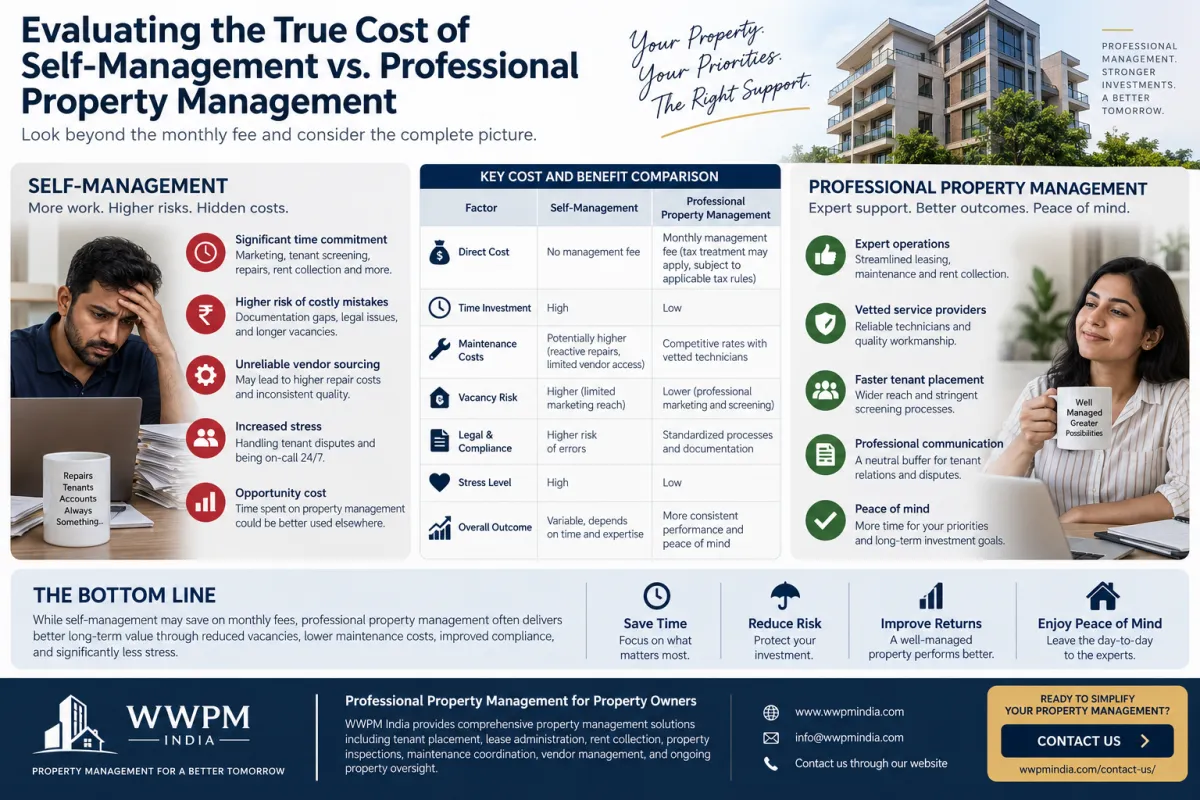
Evaluating the True Cost of Self-Management vs. Professional Property Management
Evaluating the True Cost of Self-Management vs. Professional Property Management
For many residential property owners, the decision to manage a rental unit independently is often driven by the desire to maximize monthly cash flow. At first glance, avoiding management fees appears to be the most logical financial choice. However, when evaluating self management vs property management cost, it is vital to look beyond the monthly commission and consider the total cost of ownership, which includes time, mental energy, and the financial risks of operational inefficiencies.
The Hidden Costs of DIY Management
Self-management is rarely a "set it and forget it" endeavor. The hours required to successfully lease and maintain a property are significant and often unbilled. When you manage your own property, you are responsible for marketing vacancies, vetting prospective tenants, coordinating repairs, and managing the complexities of rent collection. These tasks, while manageable for a single unit, become increasingly burdensome as the complexity of tenant relations grows.
The true cost often manifests in "opportunity cost." If your time spent resolving a plumbing emergency or vetting a new tenant could be better spent on your primary career, business, or family, the DIY approach may actually be costing you money. Furthermore, administrative errors—such as gaps in documentation or failure to enforce lease terms—can lead to legal vulnerabilities or prolonged vacancies, both of which erode your bottom line.
Operational Inefficiencies and Financial Risk
Professional property management offers a standardized approach to operations that is difficult to replicate on a small scale. For instance, professional managers have established networks of vetted contractors, ensuring that maintenance issues are resolved at fair market rates and with higher quality control. A DIY landlord, by contrast, may pay a premium for emergency repairs or struggle to identify reliable service providers, leading to recurring issues and higher long-term maintenance costs.
Another major financial factor is tenant placement. An extended vacancy period is one of the most significant losses a property owner can face. Professional managers utilize broad marketing channels and stringent screening processes to reduce vacancy time and minimize the risk of problematic tenancies. When you factor in the financial impact of a single bad tenant experience—such as late rent or property damage—the cost of professional services often proves to be an insurance-like investment rather than a mere expense.
The Stress Factor: Managing Tenant Relations
Rental property ownership inherently involves human dynamics. From negotiating lease renewals to handling disputes or maintenance complaints, the landlord-tenant relationship requires a neutral, professional buffer. Many owners find that the stress of confrontation or the pressure of being "on-call" 24/7 diminishes their enjoyment of real estate as an investment vehicle.
Professional management acts as an intermediary, ensuring that communications are documented, professional, and compliant with standard leasing practices, which protects both the owner’s assets and their peace of mind.
Making the Strategic Choice
Determining the right path requires an honest assessment of your capacity and priorities. If you value your time and prefer a hands-off investment strategy, professional management typically offers a higher return on effort. By offloading the day-to-day operational burdens to experts, you can focus on the bigger picture of your property portfolio, such as asset appreciation and long-term tax efficiency.
When comparing the two models, remember that the tax treatment of management fees can depend on the applicable tax rules and the nature of the property and income. The efficiency gains—such as potentially lower turnover rates, better maintenance outcomes, and more consistent administration—may also help offset management fees. A well-managed property is, ultimately, a more stable and professionally operated asset.
If you are looking to optimize the performance of your residential property and reduce the complexities of day-to-day oversight, professional support can make a measurable difference. To discuss how our expertise can assist you in maintaining your property's value and streamlining your rental operations, please visit the WWPM India Contact Us page to get in touch with our team.
About WWPM India
Professional Property Management for Property Owners
Managing a rental property involves much more than collecting rent. WWPM India provides comprehensive property management solutions designed to help property owners protect their investments, reduce operational stress, and improve the performance of their rental assets.
Our services include tenant placement and management, lease administration, rent collection, property inspections, maintenance coordination, vendor management, and ongoing property oversight.
Whether you own a single residential property, multiple rental units, or an investment portfolio, WWPM India provides professional local support so you can spend less time managing daily issues and more time focusing on your investment goals.
Manage Your Property. Protect Your Investment.
Website: www.wwpmindia.com
Email: [email protected]
Free Consultation: https://wwpmindia.com/contact-us/
