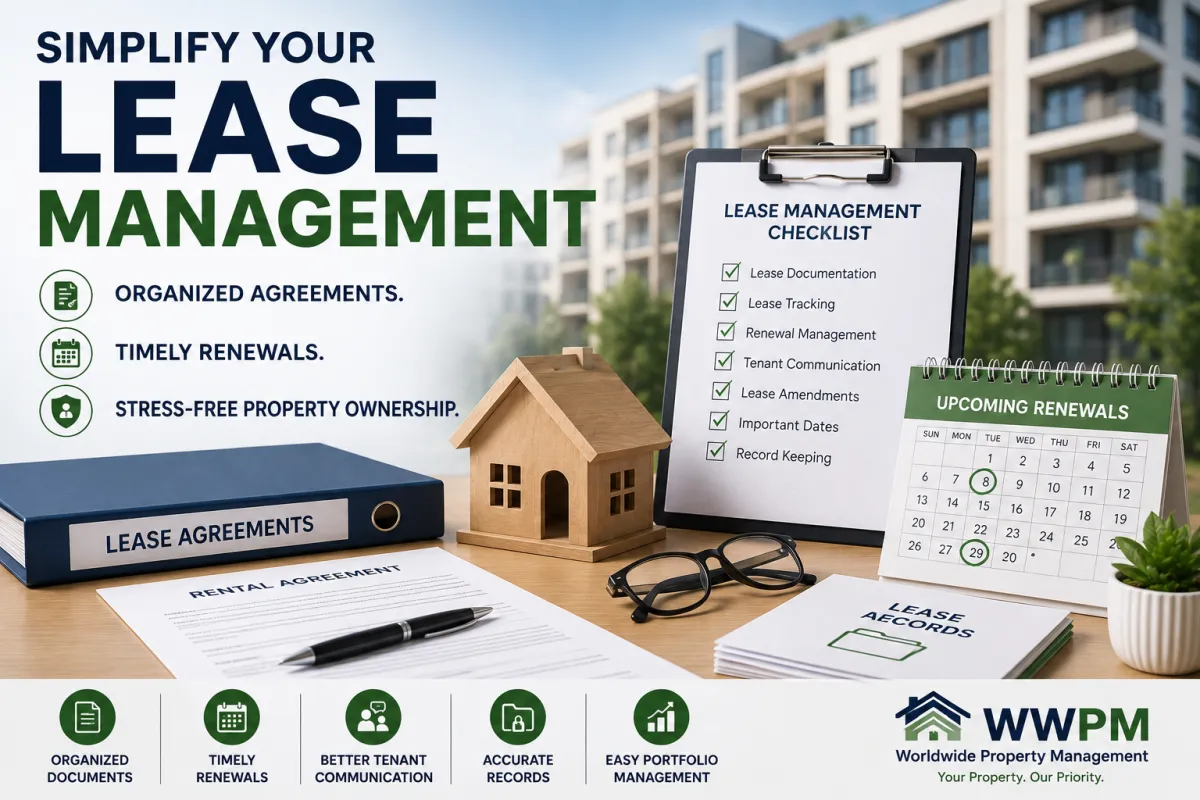
Lease Management Services in India | WWPM
How Professional Lease Management Simplifies Property Ownership in India
Introduction
A rental property involves much more than finding a tenant and collecting rent. Once a tenant moves in, property owners also need to manage rental agreements, important dates, renewals, documentation, communication, and lease-related responsibilities.
When these tasks are handled manually, it can be easy to overlook an important deadline or lose track of documents.
This is where professional lease management services can make a difference.
A structured lease management process helps property owners keep agreements organized, monitor important dates, and manage lease-related responsibilities more efficiently.
For owners with multiple properties—or those who do not have time to handle administrative work—professional lease management can make property ownership significantly easier.
What Is Lease Management?
Lease management is the process of organizing and managing everything related to a property's rental agreement throughout the tenancy.
This can include:
Rental agreement documentation
Lease start and end dates
Renewal dates
Rent terms
Security deposit records
Lease-related communication
Important notices
Tenant documentation
Lease amendments
Record keeping
Instead of treating the rental agreement as a document that is only needed when a tenant moves in, lease management looks at the agreement as an ongoing part of property administration.
Why Lease Management Matters for Property Owners

A lease establishes the expectations and responsibilities of both the property owner and tenant.
When lease information is properly organized, owners can have better visibility into their rental properties.
Professional lease management can help owners:
Keep rental documents organized
Track important lease dates
Reduce missed renewal opportunities
Maintain accurate records
Improve communication with tenants
Simplify administrative responsibilities
Manage multiple properties more efficiently
Good lease administration creates a more structured rental process for everyone involved.
Key Areas of Professional Lease Management
1. Lease Documentation
Every rental property generates important documents.
These may include:
Rental agreements
Addendums
Renewal documents
Tenant records
Property-related correspondence
Notices
Keeping these documents organized makes it easier to locate information whenever it is needed.
A professional property management team can maintain appropriate records and ensure lease-related documentation is handled systematically.
2. Tracking Lease Expiration Dates
One of the easiest things for a busy property owner to overlook is a lease expiration date.
A lease approaching its end requires planning.
Property managers can monitor upcoming expirations and coordinate with owners and tenants well in advance.
This gives everyone time to discuss:
Renewal
New rental terms
Notice requirements
Move-out plans
Property availability
Advance planning helps prevent unnecessary disruption.
3. Lease Renewal Coordination
A good tenant relationship does not end when the original lease approaches expiration.
If both parties want to continue the tenancy, the renewal process needs to be handled properly.
Professional lease management can help coordinate:
Upcoming lease expiration
Communication with the tenant
Owner instructions
Renewal terms
Updated documentation
Finalization of the renewed agreement
This makes the renewal process more organized and reduces last-minute confusion.
4. Managing Lease Changes
Rental agreements can sometimes require changes during the tenancy.
For example, there may be an agreed change involving:
Rental terms
Occupancy
Lease duration
Property rules
Other agreed conditions
Any changes should be properly documented rather than relying on informal conversations.
Professional lease administration helps maintain a clear record of approved changes and related documentation.
5. Keeping Owners Informed
Property owners should not have to search through emails or paperwork to understand the status of their leases.
A professional property management approach can provide owners with useful information about:
Active leases
Upcoming expirations
Renewals
Lease-related documentation
Tenant status
Important property updates
Better visibility allows owners to make decisions without being involved in every administrative task.
The Problems Caused by Poor Lease Management
Without an organized lease management process, property owners may face avoidable problems.
Missed Renewal Opportunities
If a lease expiration is overlooked, owners may have less time to plan the next step.
Disorganized Documents
Important agreements and records can become difficult to locate.
Communication Gaps
Tenants may not receive timely information about lease-related matters.
Administrative Stress
Managing several properties can result in a large amount of paperwork and follow-up.
Poor Portfolio Visibility
Owners may struggle to understand which leases are active, expiring, or due for renewal.
Professional lease management helps bring structure to these processes.
Benefits of Professional Lease Management
Better Organization
All important lease information can be managed systematically.
Improved Time Management
Owners don't have to personally track every lease date and document.
Fewer Administrative Errors
A structured process reduces the likelihood of overlooked deadlines and missing information.
Better Tenant Communication
Timely communication creates a smoother rental experience.
Easier Portfolio Management
Professional lease administration becomes especially valuable when an owner has multiple rental properties.
Lease Management for Multiple Properties
Managing one property may be relatively straightforward.
Managing several properties is different.
An owner with multiple rental units may have:
Different tenants
Different lease dates
Different rental amounts
Different renewal schedules
Different property requirements
Trying to track everything manually can become difficult.
A professional lease management process provides a centralized approach that makes it easier to monitor the status of each property.
How Technology Can Support Lease Administration

Technology can make lease management more organized.
Digital systems can help property management teams maintain:
Electronic documents
Lease records
Important dates
Renewal reminders
Tenant information
Communication records
However, technology is only part of the solution.
Professional oversight is still important to ensure lease-related activities are handled accurately and according to the applicable requirements.
Why Choose Worldwide Property Management?
At Worldwide Property Management (WWPM), we understand that effective property management includes the administrative details that keep a rental property running smoothly.
Our services support property owners with:
Lease Administration
Rental Agreement Coordination
Lease Renewal Management
Tenant Communication
Rent Collection
Property Inspections
Maintenance Coordination
Vendor Management
Financial Reporting
Owner Support
Our goal is to simplify the responsibilities of property ownership while helping owners maintain better visibility over their rental investments.
Final Thoughts
Lease management may seem like a small part of property ownership, but it plays an important role in keeping rental operations organized.
From tracking expiration dates and maintaining documents to coordinating renewals and communicating with tenants, professional lease administration can save property owners considerable time and reduce unnecessary administrative stress.
For owners managing multiple properties, having a structured lease management process becomes even more valuable.
With the right property management partner, owners can spend less time worrying about lease paperwork and more time focusing on their broader real estate goals.
