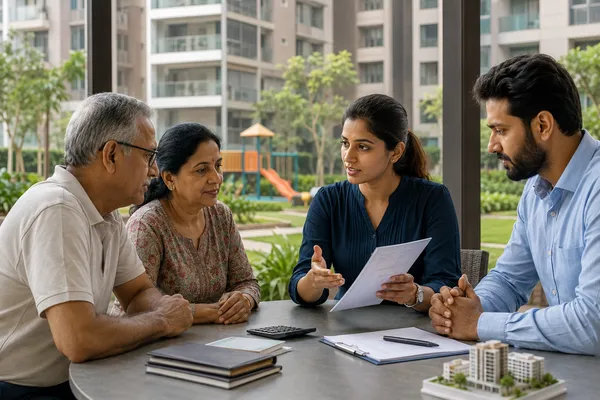
How Resident Welfare Associations Can Enforce Maintenance Fee Collection Without Conflict
How Resident Welfare Associations Can Enforce Maintenance Fee Collection Without Conflict
For Resident Welfare Association (RWA) committee members, managing the community’s finances is often a thankless task. The stability of any residential complex in India—whether in Bengaluru, Hyderabad, or Chennai—depends entirely on the timely collection of maintenance fees. These funds are the lifeblood of building operations, covering everything from elevator maintenance and security services to common area cleaning and waste management.
However, when residents delay or refuse payment, it creates a significant financial deficit that affects all homeowners. Attempting to recover these dues often leads to friction, strained neighborly relations, and, in some cases, aggressive confrontations. Developing an effective RWA maintenance fee collection strategy India committees can rely on requires moving away from ad-hoc reminders toward a structured, policy-driven approach that removes the personal element from the collection process.
Establishing Transparent Financial Policies
The primary source of conflict in fee collection is a lack of clarity. When rules regarding payment deadlines, late fees, and service disconnection are ambiguous, residents feel targeted when they are asked to pay. An effective strategy begins with formalizing these policies within the society’s bylaws.
Committees should ensure that every homeowner has access to a clearly defined document outlining the due date (e.g., the 5th or 10th of every month) and the consequences of non-payment. When policies are standardized and communicated well in advance, it is no longer the committee "harassing" a neighbor; it is simply the community adhering to an agreed-upon financial framework.
The Escalation Ladder: A Diplomatic Approach
To avoid sudden confrontations, implement a structured escalation ladder. This approach treats early delays as administrative oversights rather than intentional non-compliance.
Phase 1: The Gentle Reminder (Days 1–7 past due): Use automated tools or a simple, polite message via a community app or email. Often, a payment is simply forgotten amidst a busy work week.
Phase 2: The Formal Notice (Days 15–30 past due): If the first reminder goes unheeded, send a formal letter highlighting the outstanding balance and the potential for late payment interest, as per society rules. This signals that the committee is actively tracking the account.
Phase 3: The Direct Discussion (Day 45+ past due): If the account remains unsettled, a designated committee member should reach out personally. This is not for confrontation but for inquiry—asking if there is a specific reason for the delay, such as a banking error or a genuine temporary financial hardship.
Phase 4: Restricted Access/Suspension of Non-Essential Services: As a final resort and within legal guidelines, committees may choose to restrict non-essential services like access to amenity facilities or common area parking for the unit. This step should always be backed by the society’s board-approved resolution to ensure it remains defensible.
The Role of Professional Financial Oversight
One of the most effective ways to reduce friction is to remove the "human barrier" from the collection process. When a neighbor knocks on another neighbor’s door to collect money, the situation inherently feels personal. By outsourcing the financial administration to a professional property management firm, the committee shifts the burden of collection from themselves to an impartial third party.
Professional managers bring a level of operational distance that committee members often lack. With standardized accounting, automated invoicing, and a neutral, professional approach to follow-ups, the conflict between residents is significantly reduced. This allows the committee to focus on long-term community development, property value protection, and asset management rather than daily rent collection disputes.
Conclusion
Maintaining a healthy community budget is essential for protecting property values and ensuring the comfort of all residents. By formalizing your collection policy, utilizing a transparent escalation ladder, and considering professional administrative support, your RWA can foster a culture of timely payments without damaging the social fabric of your building. A proactive, systems-oriented approach is the best way to ensure your community remains financially stable and harmonious.
If your RWA is struggling with administrative burdens or looking for professional assistance in managing community finances and maintenance fee collection, our team is here to support you. Contact WWPM India through our official Contact Us page to discuss how we can help streamline your property management operations.
About WWPM India
Ready to Build a Back Office That Can Keep Up With Growth?
Your portfolio should not outgrow your operations.
WWPM helps property management companies strengthen the systems behind their portfolios through accounting, bookkeeping, operations support, software expertise, virtual assistance, reporting, and AI-powered automation.
Grow Your Portfolio. Not Your Administrative Burden.
Website: https://wwpm.in/
Email: [email protected]
Phone: +1 (908) 408-2665
