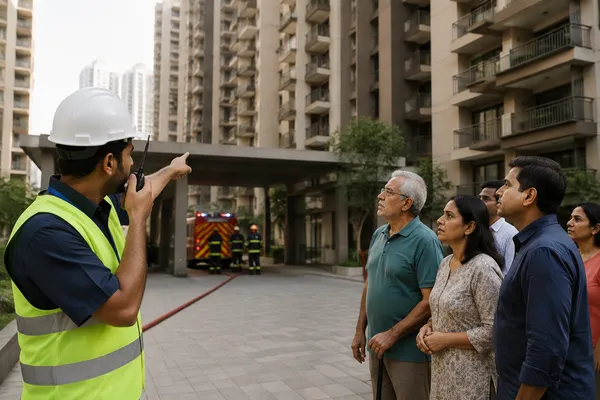
Emergency Preparedness Protocols for High-Rise Residential Communities in India
Emergency Preparedness Protocols for High-Rise Residential Communities in India
For Resident Welfare Association (RWA) committee members, the safety and security of a high-rise residential complex are not just operational priorities—they are fundamental legal and moral responsibilities. As vertical living becomes the standard in cities like Bengaluru, Hyderabad, and Chennai, the complexities of managing large-scale infrastructure require a proactive approach. Comprehensive high rise residential building emergency preparedness India mandates go beyond mere compliance; they involve creating a culture of safety that protects residents, staff, and property value.
Establishing Robust Fire Safety Audits
Fire safety is the cornerstone of emergency management in high-rise buildings. An RWA committee must move beyond basic annual checks to implement rigorous, periodic fire safety audits. This involves testing all active and passive fire protection systems, including fire hydrants, sprinkler networks, smoke detectors, and fire extinguishers.
The audit process should verify that all fire escape routes remain unobstructed and that fire doors are functional and closed. Furthermore, electrical audits are critical; overloaded circuits and faulty wiring in common areas or basement parking are frequent fire starters. By documenting these audits and ensuring that maintenance logs are updated, the committee minimizes liability and ensures that in the event of an emergency, the building's infrastructure performs exactly as intended.
Implementing Earthquake Response Drills
India’s seismic landscape varies significantly, and residents in high-rise structures need clear instructions on how to react during an earthquake. RWA committees should organize, at minimum, biannual evacuation drills that educate residents on identifying "safe zones" within their apartments and common areas.
These drills should teach residents to avoid elevators, understand assembly point locations, and recognize the importance of keeping emergency supply kits (containing water, non-perishable food, and medical essentials) ready. When residents understand the protocol, they are less likely to panic, which is a major factor in reducing injury risk during a seismic event.
Ensuring Reliability Through Backup Generator Maintenance
In high-rise living, a power failure is not just an inconvenience; it can disable essential services like water pumps, elevators, and, crucially, fire alarm systems. A stringent maintenance schedule for backup generators is mandatory for operational continuity.
Committee members should ensure that the annual maintenance contract (AMC) includes load testing, cooling system inspections, and fuel quality checks. If the generator fails to start during a crisis, the building’s ability to communicate alerts and maintain vital services collapses. Establishing a secondary manual override procedure for essential systems is also a prudent risk-management strategy.
Optimizing Security and Access Protocols
Emergency preparedness also encompasses security during crises. An RWA must have a documented protocol for controlling building access during an emergency, ensuring that emergency responders have immediate entry while simultaneously protecting the premises from unauthorized access. This includes maintaining an updated registry of residents with mobility challenges, ensuring they receive priority assistance during an evacuation.
Additionally, modern security software and surveillance systems should be integrated into the emergency command center. A clear communication strategy—using intercom systems, WhatsApp broadcast groups, or community apps—should be pre-defined to disseminate accurate information and prevent the spread of rumors, which can impede evacuation efforts.
The Financial and Operational Implications
Investing in emergency infrastructure is not a sunk cost; it is a vital form of risk management. Neglecting these systems can lead to hefty insurance premiums, legal complications, and a significant decline in property value. Furthermore, a well-prepared community sees higher resident satisfaction and retention, as safety remains the number one priority for homeowners and tenants alike.
Managing these multifaceted protocols requires consistent oversight, technical expertise, and detailed administrative record-keeping. If your RWA committee requires assistance in professionalizing your property maintenance, vendor management, or administrative compliance, the WWPM India team is here to support you. We help RWA boards streamline their operational efficiency and ensure that safety protocols are strictly followed. To learn more about our services, please visit our Contact Us page.
About WWPM India
Ready to Build a Back Office That Can Keep Up With Growth?
Your portfolio should not outgrow your operations.
WWPM helps property management companies strengthen the systems behind their portfolios through accounting, bookkeeping, operations support, software expertise, virtual assistance, reporting, and AI-powered automation.
Grow Your Portfolio. Not Your Administrative Burden.
Website: https://wwpm.in/
Email: [email protected]
Phone: +1 (908) 408-2665
